No, Modern Hebrew Is Not A Conlang

It is a view commonly alluded to by amateur linguists, among whom I count myself, that Modern Hebrew is a constructed language “invented” by Eliezer Ben-Yehuda. The official Tumblr of the Language Construction Society once alluded to this, sparking a discussion on the LCS list which introduced a number of equally ridiculous claims, such as … Read more

Esperanto and Globasa Compared: La feino (Ekzercaro 11, 13, 15, 17, 19, 21, and 23)

A young woman at a spring in a forest gives water to a poor old beggar.

Here’s the continuation of my comparison of Esperanto with Globasa using a translation of Esperanto’s Ekzercaro. This blog post is devoted entirely to La feino; the intervening sections will be translated in the next part in this series. Peari (La feino) 11 Unu vidvino havis du filinojn. La pli maljuna estis tiel simila al la … Read more

Esperanto and Globasa compared: Ekzercaro 5-10

La Fundamento de Esperanto de L. L. Zamenhof: Gramatiko, Ekzercaro, Universala Vortaro

The three-part Fundamento de Esperanto forms the basis of how people speak Esperanto. It begins with a 16-rule grammar, but the Ekzercaro is where most of the practical details of Esperanto are really hashed out. It’s thanks to the Ekzercaro that grammarians are able to derive most of the other rules of Esperanto grammar. As … Read more

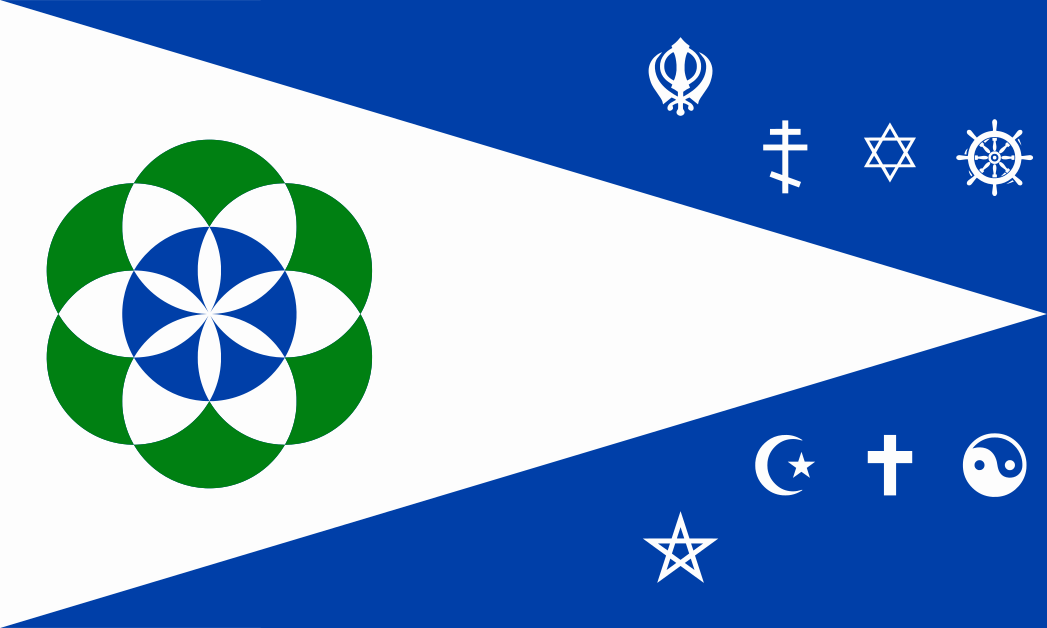
Prayers in Globasa from different religions

The Globasa flag with Sikh, Orthodox Christian, Jewish, Hindu, various (pentagram), Islamic, Catholic, and Chinese religious symbols.

I’ve been Jewish my whole life, but I was a spiritual seeker in my 20s and explored all sorts of different religions, whether to learn more about them or see if they offered something better. I came to learn there was no such thing as better when it came to religions: that they all offered … Read more

Chai Symbols for LGBTQIA+ Jews

The Hebrew word חי chai, meaning "living" or "alive," in the LGBTQIA+ pride colors.

Four years ago, I was thinking about the threats faced by the LGBTQIA+ community throughout the world, and got the idea to make a chai symbol in the colors of the pride flag. The Hebrew word חי, meaning “living” or “alive,” is a Jewish symbol for life, and is worn by many Jews as a … Read more

Globasa LGBTQ pride flags

A mashup of the LGBTQ pride and Globasa flags

It’s that time of year when all the Discord servers say “Happy Pride” and give a long spiel about it. The Globasa Discord server was no exception. Despite reading their pride speech, I was inspired to create some pride flags mashed up with that of Globasa. Globasa comes from the current generation of international auxiliary … Read more

The name “Rivka” in Toki Pona

The Sitelen Pona glyph for "soweli" with its eyes replaced with the name "Wika", formed out of "wan insa kulupu ante".

I go by Rifkele dos Ketsele in my visual art life, and it’s close to my name in real life. The name Rifkele is a diminutive of Rifke, which is “Rebecca” in Ashkenazi Hebrew. The Modern Hebrew equivalent is Rivka. In the 130-word minimalist constructed language Toki Pona, names are all adapted to a very … Read more

How do you say “Free Palestine” in Toki Pona?

The Palestinian flag with overlayed Toki Pona text: kulupu Palasin o ken ali! (May Palestinians have full rights!)

Toki Pona is a 130-word minimalist constructed language created by Sonja Lang. Because of the extreme paucity of words, you have to really think about what you mean when you translate something. This makes it a great tool for clarifying your own thoughts. There is no single word for “free” in Toki Pona. The community-sourced … Read more