This is the first installment in what will hopefully be a weekly series, spotlighting (infodumping about, really) different constructed languages with a focus on non-IALs. When I get the energy, I intend to start a separate “auxlang of the week” or “auxlang of the month” series.
Belter Creole or Lang Belta is a language created by the linguist and polyglot Nick Farmer for the television series The Expanse. At the beginning of this series, the solar system has been colonized, but humanity has yet to reach beyond it. The earliest explorers of the Asteroid Belt came from all over the world, and their descendants, the Belters, speak a creole based primarily on English but with an international vocabulary.
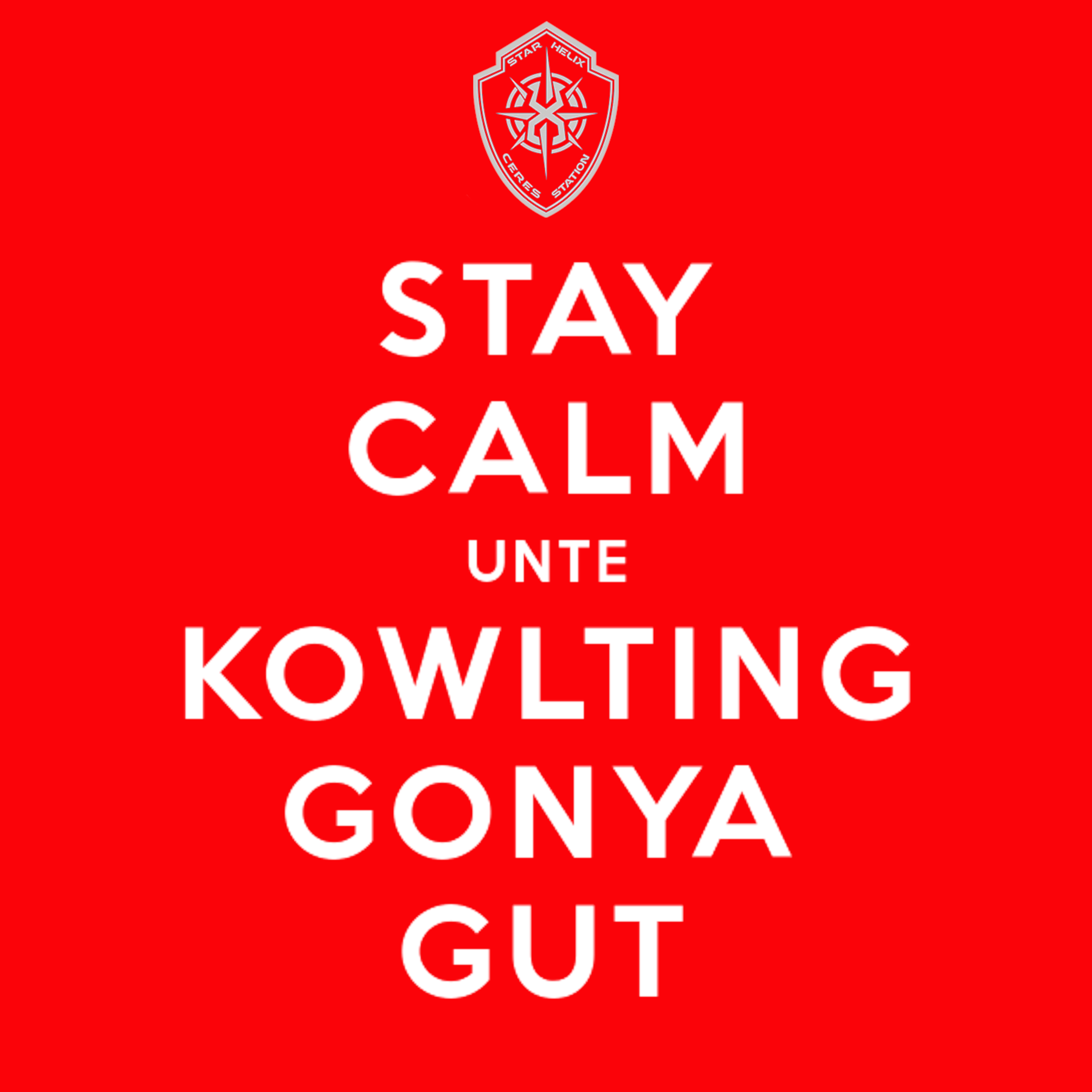
The above image contains one of the first sentences you hear in the language: “Stay calm, unte kowlting gonya gut.” The sentence itself codeswitches as is common among Belters; the phrase “stay calm” is, as far as we know, English and not Belter. The meaning of the full sentence is “Stay calm, and everything will be OK.”
To analyze this sentence, we have:
- unte: from German und
- kowl-ting: from Hebrew כל and English “thing”
- gonya: from English “gonna”
- gut: either from German gut or English good
unte kowl-ting gonya Ø gut
and all-thing FUT COP good
Right off the bat, I think it’s really cool that they included words of Hebrew etymology in the language, despite the potential political blowback they might have received. Since the ancestors of the Belters came from all over the world, of course some of them would have been Hebrew speakers. The existence of Modern Hebrew is a reality of the world we live in. There isn’t a lot of Hebrew in Lang Belta, but the one Hebrew word I’m aware of – kowl – is very frequently used, and forms the basis of its “every” correlatives (everyone, everything, everywhere, etc.).
Also, “kowlting gonya gut” contains a zero copula in the future tense, which is very cool and, to my knowledge, rare. Hebrew, for example, uses להיות for all non-present forms of “to be,” despite having a zero copula in the present (though it often links subjects and predicates with pronouns). The original meaning of להיות was “to become,” but was repurposed when a word was needed to inflect in non-present tenses. Similarly, Turkish also allows a zero copula, and its non-zero copula is an inflectional ending (-tir -tır -tur -tür -dir -dır -dur or -dür, depending on phonetic environment), but for the future, it uses olacak, from olmak, meaning “become.”
With that said, the sentence is not a good example of the breadth of languages Belter Creole borrows from, so let’s look at another.
Den ta desh lik bodzha. Ere imbobo ta desh ubicha. Imalowda… ta ando wameku, unte ta ando shetexe.
“Then there was like an explosion. In the room, there were thugs. They… were screaming, and stabbing.”
- den: from English then or German denn
- ta: presumably from the English inflectional ending -(e)d
- desh: from Japanese です desu, which sounds like “dess”
- bodzha: from Mandarin 爆炸 (bàozhà)
- ere: possibly from English here
- imbobo: from Zulu imbobo
- ubicha: from Russian убийца (ubitza)
- imalowda: from English him and load of
- ando: from the Spanish inflectional ending -ando
- wameku: from Japanese 喚く (わめく, wameku)
- shetexe: from German stechen
den ta desh lik bodzha
then PAST EXIST like explosion
ere imbobo ta desh ubicha
LOC room PAST EXIST thug
im-alowda ta ando wameku unte ta ando shetexe
PRO.3-PL PAST CONT scream and PAST CONT stab
Hopefully you’re getting an idea of what Lang Belta is like. I think it’s one of the coolest constructed languages to appear in a TV show, and that’s saying a lot. Other cool words include sasa, from a reduplication of the first syllable of a lot of Romance words for “know,” and the cheer yam seng, from Cantonese.
The word wel also deserves special mention, referring to a gravity well, but usually specifically to planets. There is no other known Belter word for planet. A Belter who is obsessed with the culture of Earth and/or Mars is called a welwala, which comes from wel and the Hindi derivational ending -वाला (-vālā, “one who ____s”). A lover is an amawala (ama comes from the Romance languages), and the primary partner of a polyamorous person is called an ankawala (from “anchor”).
I haven’t even gotten into the non-verbal part of the language, where hand gestures are used to communicate a wide breadth of information, as speakers of the language spend a lot of time in vac suits. Part of why I haven’t gotten into it is that I don’t know much about the hand gestures and what they mean. But the effect is to create an impression of a long and rich history, and a distinct culture, which is what a fictional language should do.
A collection of Belter dialog from The Expanse.
This blog post barely does the language justice, so if you’re still interested, go watch The Expanse. Then head to the Lang Belta subreddit.